
How often should you send marketing emails?
It sounds like a question that should have a straightforward answer. Once a week? Twice a month? Every Tuesday at 10 a.m.?
Unfortunately, there isn’t a magic number.
The right email frequency depends on your audience, what you’re sending, why you’re sending it, and how subscribers respond. A cadence that works perfectly for one organization could overwhelm another audience or leave valuable opportunities on the table.
That’s also why relying too heavily on email frequency benchmarks can be misleading. Benchmarks can give you a starting point, but your own subscribers will tell you much more about how often they want to hear from you.
The trick is to know which signals to watch.
Why Email Frequency Matters
Every email you send creates another opportunity for a subscriber to engage, click, convert, or take the next step in their relationship with your organization.
But more opportunities don’t automatically mean better results.
Send too frequently and subscribers may start tuning you out. Engagement can decline, unsubscribes can increase, and frustrated recipients may mark your messages as spam.
Send too infrequently and you have the opposite problem. Subscribers may forget why they signed up, your brand can lose visibility, and contacts who were once interested may become increasingly difficult to engage.
The goal isn’t to send as many or as few emails as possible. It’s to find a sustainable cadence that keeps your organization relevant without exhausting your audience.
And that cadence doesn’t necessarily need to be the same for everyone.
So, How Often Should You Send Marketing Emails?
There is no universal “best” email frequency.
You’ll find plenty of benchmarks recommending a certain number of emails per week or month. Those numbers can be useful when you’re starting from scratch, but they shouldn’t become a rule your entire email program has to follow.
Consider how different these subscribers might be:
- A new prospect who just downloaded a buyer’s guide
- A longtime customer who regularly engages with your emails
- A contact who hasn’t clicked an email in six months
- Someone who registered for an upcoming event
- A customer who just purchased a product
- A prospect actively researching your services
Sending every one of those people the exact same number of emails simply because they’re on your marketing list ignores what you already know about them.
Instead, think of email frequency as something you optimize based on engagement, intent, journey stage, content, and subscriber expectations.
Signs You May Be Sending Too Many Emails
Email fatigue doesn’t always announce itself with a dramatic spike in unsubscribes. Often, the warning signs appear gradually.
Engagement is declining
Look beyond the performance of an individual campaign.
If clicks, conversions, or other meaningful engagement metrics are trending downward across several sends, frequency may be part of the problem.
Be careful with open rates here. Privacy features such as Apple Mail Privacy Protection have made opens a less reliable measure of individual engagement. Clicks, conversions, website activity, and other downstream behaviors can provide a clearer picture.
Unsubscribes are increasing
Every email program will have unsubscribes. That’s normal.
What’s more important is the trend.
If unsubscribe rates consistently increase as your sending volume increases, subscribers may be telling you they’re hearing from you more often than they’d like.
Spam complaints increase
An unsubscribe is preferable to a spam complaint.
When subscribers repeatedly receive emails they don’t want, some won’t bother finding the unsubscribe link. They’ll simply mark the message as spam.
That’s not only a subscriber-experience problem. Spam complaints can negatively affect your sender reputation and ultimately make it more difficult for your emails to reach the inbox.
Your emails are competing with each other
Sometimes the problem isn’t the total number of emails you send. It’s how they’re scheduled.
A subscriber might receive your monthly newsletter on Tuesday, a promotional campaign on Wednesday, an automated nurture email on Thursday, and an event invitation on Friday.
Individually, each campaign makes sense.
Collectively, you’ve sent four emails in four days.
This is why marketers need visibility across broadcast campaigns and automated journeys when evaluating frequency. Your subscribers don’t distinguish between departments, campaigns, or workflows. They simply know how many times your organization appeared in their inbox.
Signs You May Not Be Sending Enough
Marketers often worry about over-emailing, but sending too little can hurt performance, too.
Subscribers aren’t engaging when you finally email them
If months pass between communications, recipients may not immediately recognize your organization or remember why they subscribed.
Consistency helps establish familiarity.
You’re missing important moments in the customer journey
Someone downloads a resource, requests information, attends an event, or starts evaluating a product—and then hears nothing from you for three weeks.
That’s not a frequency problem in the traditional sense. It’s a missed opportunity to communicate when engagement and intent are highest.
Marketing automation can help fill those gaps by triggering relevant messages based on behaviors instead of waiting for the next scheduled campaign.
You’re trying to fit too much into every email
Another clue that your cadence may be too light is the overloaded newsletter.
When every email contains eight announcements, four blog posts, three promotions, an event invitation, and a company update because it’s your only send that month, important messages have to compete for attention.
Sometimes sending more targeted emails is more effective than cramming everything into fewer sends.
Stop Thinking About Frequency at the List Level
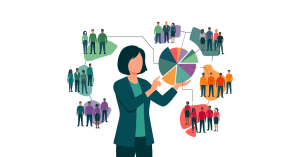
One of the biggest improvements marketers can make is moving away from the idea that the entire database needs one email cadence.
Your most engaged contacts may happily receive multiple emails in a week.
Someone whose engagement has been declining for months probably shouldn’t.
This is where segmentation becomes especially valuable.
You might create groups based on:
- Recent email engagement
- Website activity
- Customer versus prospect status
- Lifecycle or journey stage
- Product or service interests
- Purchase history
- Event participation
- Stated communication preferences
From there, frequency becomes part of your targeting strategy.
Highly engaged contacts can receive more relevant opportunities to interact. Less-engaged contacts can receive fewer, higher-value communications or enter a re-engagement campaign before eventually being suppressed.
The question changes from “How often should we email our list?” to “How often should we email this person?”
That’s a much more useful question.
Remember That Automated Emails Count, Too
Marketing automation makes it easier to send timely messages, but it can also create frequency problems when workflows operate independently.
Imagine someone downloads a guide and enters a five-email nurture campaign. Two days later, they register for a webinar and enter another automated series. They’re also subscribed to your weekly newsletter and qualify for a promotional campaign.
Every automation is functioning exactly as designed.
The subscriber’s experience is still not.
Before adding another campaign or workflow, map the ways a contact could qualify for multiple communications at once.
Consider using segmentation, suppression rules, engagement data, and journey stage criteria to prevent unnecessary overlap.
Good marketing automation isn’t about sending more emails automatically. It’s about sending the right emails when they make sense.
Let Subscribers Have a Say
Sometimes the easiest way to determine how often someone wants to hear from you is to ask.
An email preference center can allow subscribers to choose the types of communications they’re interested in or, when appropriate, how frequently they’d like to receive them.
That creates an alternative to the all-or-nothing unsubscribe.
Someone who no longer wants three emails a week might still happily receive your monthly newsletter. Someone interested in educational content may not want promotional emails. Giving subscribers more control can help preserve relationships that otherwise might end with an unsubscribe.
Just as importantly, set expectations when someone initially subscribes.
If you promise a monthly newsletter and suddenly start emailing three times a week, don’t be surprised if subscribers aren’t thrilled about it.
How to Test Your Email Frequency
You don’t need to completely overhaul your email calendar to find a better cadence.
Start with a controlled test.
Choose a meaningful audience segment and establish your current performance baseline. Then increase or decrease the frequency for a portion of that audience while keeping other variables as consistent as possible.
Monitor the results over several sends rather than judging the experiment based on a single campaign.
Pay attention to metrics such as:
- Click-through rate
- Conversions
- Unsubscribe rate
- Spam complaint rate
- Website engagement
- Leads or opportunities generated
- Revenue or other business outcomes
Most importantly, look at total results across the testing period, not just per-email performance.
Sending more frequently could lower the click rate of each individual email while still producing more total clicks and conversions. Conversely, sending twice as many emails isn’t a win if the additional volume produces almost no incremental results while increasing unsubscribes and complaints.
The goal is to find the point where additional sends stop creating meaningful value.
Your Best Email Frequency Will Keep Changing
Even after you find a cadence that works, don’t consider the question settled.
Subscriber behavior changes. Buying cycles change. Your content changes. Seasonal demand changes. New campaigns and automated workflows get added to your program.
Your email frequency strategy should adapt along with them.
Regularly review:
- How many emails contacts are actually receiving
- Which segments are receiving the most
- Whether engagement changes as frequency increases
- Where automated campaigns overlap
- Whether inactive contacts should receive fewer emails
- Whether high-intent contacts could benefit from more timely communication
The best email frequency isn’t a number you find once and add to your marketing playbook forever.
It’s something you continually optimize.
Send Based on Behavior, not a Magic Number
If you’re looking for the perfect number of marketing emails to send each week, you probably won’t find it.
And that’s a good thing.
Modern email marketing gives us much better options than choosing one arbitrary cadence for an entire database. Segmentation, engagement data, behavioral triggers, preference management, and marketing automation make it possible to communicate based on what individual subscribers actually need.
Start with a reasonable cadence. Watch how your audience responds. Test changes deliberately. Give subscribers control. And pay attention to the combined experience created by every campaign and automated workflow.
Because the real question isn’t whether three emails a week is too many.
It’s whether three emails a week from you are valuable enough to deserve someone’s attention.
Make Every Send Count
Finding the right email frequency gets easier when you can see how your audience is engaging and adjust accordingly.
The emfluence Marketing Platform brings email, marketing automation, segmentation, engagement data, and reporting together so you can build campaigns around what your contacts are actually doing—not an arbitrary sending schedule.
Ready to build a smarter email strategy? Request a demo of the emfluence Marketing Platform.