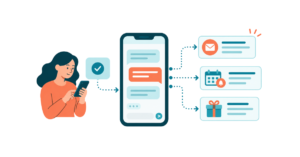

You spend time building an SMS campaign, choosing the right audience, and writing a message that encourages action. You schedule the send, expecting your subscribers to receive it within seconds.
But when you check the results, something isn’t right.
Some messages failed. Others are still waiting for delivery confirmation. And a portion of your audience may never have received the promotion, reminder, or update you worked to create.
SMS delivery failures can happen for several reasons, including carrier filtering, sender registration problems, invalid phone numbers, consent issues, and network limitations. The challenge is figuring out which problem you’re dealing with and what you can actually do about it.
Unlike email, where marketers are familiar with concepts like spam folders and sender reputation, SMS delivery involves mobile carriers, messaging providers, and registration requirements that aren’t always visible during campaign creation.
Understanding these factors is the first step toward improving SMS deliverability.
Let’s look at seven common reasons marketing text messages fail to reach subscribers and how to address each one.
What Is SMS Deliverability?
SMS deliverability refers to the ability of a text message to reach its intended recipient through the mobile messaging network.
When you send a marketing text, it typically passes through your messaging platform, its messaging provider, and one or more carrier networks before reaching the recipient’s device.
Problems at any point in that process can prevent delivery.
SMS Sent vs. Delivered vs. Failed: What’s the Difference?
In the emfluence Marketing Platform, SMS reporting provides visibility into messages that are waiting to be delivered, messages with unconfirmed delivery, successful deliveries, failed messages, and unsubscribes. Understanding these statuses can help marketers distinguish confirmed delivery failures from messages that are still being processed.
| SMS Status | What It Means |
| Queued and Pending Confirmation | Messages waiting to be delivered |
| Unknown | Messages sent but not yet confirmed delivered |
| Delivered | Messages confirmed as delivered |
| Failed | Messages unable to be delivered |
| Unsubscribes | Contacts who unsubscribed |
Exact status names and definitions vary by messaging provider.
A delivered status also doesn’t guarantee that someone read the message, clicked a link, or took action. Those are separate engagement and conversion measures.
For SMS marketing, a useful starting metric is:
SMS Delivery Rate = (Delivered Messages ÷ Messages Attempted) × 100
For example, if you attempt to send 5,000 text messages and 4,750 are confirmed delivered, your delivery rate is 95%.
When calculating this metric, use a consistent denominator and account for messages still pending delivery. Some platforms calculate delivery rates differently, so it’s important to understand what your reports include.
If your delivery rate is declining, the following seven issues are worth investigating.
1. Your Business Isn’t Properly Registered for A2P Messaging
One of the first things to investigate is whether your business is authorized to send messages through its chosen sender type.
In the United States, businesses sending application-to-person (A2P) messages through standard 10-digit phone numbers generally need to complete A2P 10DLC registration.
A2P 10DLC stands for Application-to-Person 10-Digit Long Code. It allows businesses to send approved messaging traffic using registered local phone numbers.
Why Registration Matters
Registration helps carriers identify the business sending messages and understand the purpose of its messaging campaigns.
The process generally involves registering business information, identifying messaging use cases, and associating the appropriate phone numbers with an approved campaign.
If your registration is incomplete, rejected, suspended, or incorrectly configured, messages may be blocked or fail to send.
For example, a business might have an approved messaging campaign but attempt to send from a phone number that hasn’t been properly associated with that registration.
How to Fix It
Start by confirming that your business and messaging campaign registrations are approved and active. Verify that your sending phone number is associated with the appropriate registration and that your registered use case accurately reflects the messages you’re sending.
If you’re using the emfluence Marketing Platform, SMS is configured through Twilio. Your messaging service must have an associated phone number and the appropriate approved messaging campaigns.
Most emfluence SMS accounts use an emfluence-managed Twilio subaccount, although organizations can also connect their own Twilio accounts.
If you’re experiencing registration-related delivery problems, contact your SMS provider or emfluence support to verify your messaging service configuration, phone numbers, and campaign approvals.
Businesses using toll-free numbers or short codes may have different verification and approval requirements.
The takeaway: Before changing your message content or audience, confirm that your sending infrastructure is properly registered and authorized.
2. Mobile Carriers Are Filtering Your Messages
Even properly registered messages can be filtered by mobile carriers.
Carrier filtering is designed to protect subscribers from spam, fraud, unwanted messages, and traffic that violates messaging policies.
Unlike email spam filtering, which may place a message in a separate folder, SMS filtering can prevent a message from reaching the recipient entirely.
What Triggers SMS Carrier Filtering?
Carrier filtering systems consider multiple signals, including message content, sending patterns, subscriber complaints, and compliance with messaging policies.
Potential warning signs include:
- Messages that resemble common spam or phishing attempts
- Suspicious or misleading links
- Repeatedly sending nearly identical messages at unusual volumes
- High complaint or opt-out activity
- Messaging that doesn’t align with the registered use case
- Traffic that violates carrier or provider policies
For example, a legitimate promotional message that uses an unfamiliar shortened URL, aggressive language, and an unclear sender identity may resemble unwanted traffic.
That doesn’t mean every message containing a link or promotional offer will be blocked. Carrier filtering evaluates multiple factors, and the exact rules aren’t always publicly disclosed.
How to Fix It
Start by reviewing your message content and sending practices.
Clearly identify your organization, use trustworthy links, and make sure your message accurately represents the offer or information being shared.
Avoid misleading claims, deceptive urgency, or messaging patterns that resemble spam.
If delivery problems persist, review your provider’s error reporting and contact support with examples of failed messages.
The takeaway: The goal isn’t to trick carrier filters. It’s to establish legitimate, compliant messaging practices that carriers and subscribers can trust.
3. Your Contact List Contains Invalid or Non-SMS-Capable Numbers
Not every phone number in your CRM or marketing database can receive SMS messages.
Some numbers may be disconnected, entered incorrectly, assigned to landlines, or associated with unsupported services.
Others may have been valid when collected but are no longer active.
How Phone Number Quality Affects Deliverability
Imagine a company imports several thousand customer records from its CRM.
Those records might include mobile numbers, office landlines, outdated contact information, and phone numbers entered without consistent formatting.
If the company treats every number as SMS-capable, delivery failures are inevitable.
Even numbers that appear correctly formatted may not be active or capable of receiving text messages.
How to Fix It
Review how your organization collects, validates, and maintains phone numbers.
Consider the following practices:
- Validate phone number formatting during collection.
- Store numbers consistently, including country codes when appropriate.
- Use a phone number validation service when available to identify line types.
- Avoid sending SMS to numbers known to be disconnected or unsupported.
- Review recurring delivery failures and update contact records accordingly.
For U.S. numbers, international E.164 formatting typically begins with +1, followed by the 10-digit phone number.
Phone number validation helps reduce avoidable delivery failures, but it doesn’t replace consent requirements.
In the emfluence Marketing Platform, only contacts with a phone number saved in the Mobile field are selected to receive SMS messages. However, having a number in that field doesn’t guarantee that it’s valid, active, or capable of receiving texts.
emfluence does not independently verify recipients’ mobile numbers, so marketers should establish their own processes for collecting, validating, and maintaining accurate phone number data.
The takeaway: Better SMS deliverability often starts with better contact data.
4. Subscribers Haven’t Provided Appropriate Consent
SMS marketing requires careful consent management.
A phone number appearing in your CRM doesn’t automatically mean the person has agreed to receive promotional text messages.
Similarly, someone who subscribes to your email newsletter hasn’t necessarily consented to SMS marketing.
Sending messages without appropriate permission can create compliance problems, increase complaints, and contribute to carrier filtering.
Why SMS Consent Matters
Marketing text messages are subject to applicable laws, carrier requirements, and messaging provider policies.
In the United States, requirements can involve the Telephone Consumer Protection Act (TCPA), related regulations, and industry messaging guidelines.
The specific requirements depend on the type of message, the circumstances in which consent was obtained, and other factors.
As a general best practice, marketers should obtain and document appropriate permission before sending promotional SMS messages.
Subscribers should also understand what they’re signing up for and how to stop receiving messages.
How to Fix It
Review your SMS signup and consent processes.
Make sure your organization:
- Collects consent appropriate to the messages being sent.
- Clearly identifies the sender and messaging purpose.
- Maintains records of consent.
- Honors opt-out requests promptly.
- Keeps SMS permissions distinct from email subscription status.
- Avoids using purchased or shared contact lists without appropriate authorization.
If someone has opted out, don’t attempt to bypass that restriction by changing audiences, sender numbers, or messaging workflows.
In the emfluence Marketing Platform, SMS unsubscribes and resubscribes are recorded on the contact’s SMS tab. You can also review current SMS opt-outs on the Contact Detail tab under SMS Opt Out.
These records help marketers understand a contact’s messaging preferences and avoid sending communications to people who have opted out of a particular messaging service.
The takeaway: Consent isn’t just a compliance requirement. It’s a foundation for a reliable SMS marketing program.
5. You’re Sending Too Many Messages Too Quickly
SMS messaging systems and mobile carriers have limits on how quickly messages can be processed.
These limits vary depending on the sender type, registration, messaging provider, and carrier.
If your campaign attempts to send more messages than the available throughput allows, delivery may be delayed. In some circumstances, messages can fail because queues exceed their limits, or messages expire before delivery.
Understanding SMS Throughput
Throughput refers to the rate at which messages can be sent or processed, often measured in message segments per second.
A business sending a few hundred appointment reminders may have very different throughput requirements from an organization sending tens of thousands of promotional messages at once.
For example, a retailer announcing a limited-time sale to 50,000 subscribers may need to account for how long the campaign will take to process.
If the promotion expires before some messages reach recipients, the campaign may lose value even when those messages eventually arrive.
How to Fix It
Plan large campaigns around your provider’s throughput capabilities.
Before scheduling a high-volume send:
- Understand the sending limits associated with your sender type.
- Allow enough time for messages to be processed.
- Avoid unnecessary last-minute bulk sends.
- Review queue-related errors and delivery delays.
- Coordinate with your SMS provider when planning unusually large campaigns.
If your campaign is time-sensitive, build in a reasonable delivery window rather than assuming every subscriber will receive the message simultaneously.
The takeaway: Sending capacity should be part of campaign planning, especially for large or time-sensitive SMS campaigns.
6. Your Messages Are Too Long or Contain Unsupported Content
Longer messages can be divided into multiple segments.
How Message Length and Encoding Affect SMS Delivery
SMS messages have technical limits that affect how they’re processed and delivered.
A standard SMS message using GSM-7 encoding can contain up to 160 characters in a single segment. Longer messages are generally divided into multiple segments and reassembled by the receiving network.
Messages containing emojis or certain special characters may use different encoding, which can reduce the number of characters available in each segment.
In the emfluence Marketing Platform, Twilio recommends keeping SMS messages under 320 characters to avoid potential issues. Messages can contain up to 1,600 characters, but messages exceeding that limit will fail.
The platform provides an estimate of character usage, although individual providers may count certain characters differently.
How to Fix It
Keep marketing texts concise and check the character count before sending. Pay particular attention to emojis, special characters, personalized content, and long URLs.
If you’re using emfluence, aim for fewer than 320 characters whenever practical and stay within the platform’s 1,600-character maximum.
Remember that longer messages can result in multiple billable segments, even when they are successfully delivered.
The takeaway: Shorter, simpler messages are often easier to manage, but actual delivery failures should be diagnosed through provider reporting rather than assuming message length is the cause.
7. The Recipient’s Device or Carrier Is Temporarily Unavailable
Sometimes a delivery failure has nothing to do with your campaign.
The recipient’s phone may be turned off, outside network coverage, disconnected from service, or temporarily unable to receive messages.
Carrier outages and network congestion can also affect delivery.
Why Some Delivery Failures Are Outside Your Control
A message may be accepted by your SMS provider but fail farther along the delivery process.
For example, a subscriber traveling in an area with limited cellular coverage might not receive a time-sensitive message when expected.
Some messaging systems may continue attempting delivery for a limited period, while others may report the message as undelivered.
Delivery behavior depends on the provider, carrier, and applicable message validity settings.
How to Fix It
Review the delivery status and error information before taking action.
If the failure appears temporary, your provider may retry delivery automatically.
Avoid repeatedly resending the same message without understanding the problem. Unnecessary retries can create duplicate messages, additional costs, or a poor subscriber experience.
For recurring failures, investigate whether the number remains active and whether the recipient’s carrier or device supports the message.
The takeaway: Not every SMS delivery failure can be prevented, but accurate reporting can help distinguish temporary network problems from issues that require corrective action.
How to Troubleshoot SMS Delivery Failures
When a campaign underperforms, resist the temptation to change everything at once.
A structured troubleshooting process makes it easier to identify the source of the problem and avoid unnecessary adjustments.
Review Your SMS Delivery Reports
In the emfluence Marketing Platform, you can find reporting for both manual and automated SMS messages in the Reporting section.
Individual SMS reports include five reporting categories:
- Queued and Pending Confirmation: Messages waiting to be delivered.
- Unknown: Messages that have been sent but haven’t been confirmed as delivered.
- Delivered: Messages confirmed as delivered.
- Failed: Messages that couldn’t be delivered.
- Unsubscribes: Contacts who unsubscribed from SMS messaging.
Each reporting category is clickable, allowing you to review the associated contacts.
You can also use the Contact Activities report to examine SMS activity over a selected period, including sent messages, failed messages, unsubscribes, and incoming replies.
Start by reviewing failed messages and looking for patterns in the affected contacts. Check phone number accuracy, messaging permissions, and whether the failures are concentrated in a particular campaign.
If you can’t determine the cause from the available reporting, contact emfluence support with details about the affected message and recipients.
Investigate Failed Messages
Once you’ve identified the contacts associated with failed messages, look for patterns that might explain the issue.
Are the failures concentrated in a particular campaign? Do the affected contacts have valid mobile numbers? Were the messages sent from a properly configured messaging service? Could the message content or sending volume be contributing to the problem?
Some messaging providers offer additional diagnostic information, such as carrier rejection codes or specific delivery error reasons. However, the availability of these details varies by provider and platform.
If you can’t determine the cause from your available reporting, contact emfluence support with the affected campaign, sending date, and examples of failed messages.
Test Before Sending Large Campaigns
Testing can help identify problems before they affect your entire audience.
Use appropriately consented test recipients across different mobile carriers when practical.
Confirm that messages are received, links work, and sender identification is clear.
Testing doesn’t guarantee that every message in a large campaign will be delivered, but it can help uncover configuration and content issues before launch.
How to Improve SMS Deliverability Over Time
SMS deliverability isn’t something you should evaluate only after a failed campaign.
Build delivery monitoring into your regular marketing reporting.
Track trends in delivered and failed messages, pending or unknown delivery statuses, and SMS opt-outs. When failures increase, investigate potential causes using the available reports and support resources.
Pay particular attention to sudden changes.
A gradual increase in invalid numbers may suggest contact data problems. A sudden spike in filtered messages may indicate a sender registration, content, or compliance issue.
Also consider how SMS fits into your broader communication strategy.
Not every message needs to be a text. Email may be more appropriate for longer explanations, detailed educational content, or communications that aren’t time-sensitive.
Using each channel intentionally can help reduce unnecessary messaging while improving the relevance of the communications subscribers receive.
Frequently Asked Questions About SMS Deliverability
Why are my marketing text messages not being delivered?
Common causes include incomplete sender registration, carrier filtering, invalid phone numbers, missing consent, throughput limitations, unsupported content, and temporary device or network issues. Review your SMS delivery reports and provider error details to identify the likely cause.
What is a good SMS delivery rate?
There isn’t one universal benchmark that applies to every SMS program. Delivery rates vary based on audience quality, sender type, carrier conditions, and messaging practices. Monitor your historical performance, investigate changes, and focus on resolving preventable failures.
Can mobile carriers block marketing text messages?
Yes. Mobile carriers use filtering systems to identify unwanted, suspicious, or noncompliant messages. Even legitimate businesses can experience filtering, which is why sender registration, appropriate consent, and compliant messaging practices matter.
Does A2P 10DLC registration guarantee SMS delivery?
No. A2P 10DLC registration helps authorize business messaging through registered 10-digit numbers in the United States, but it doesn’t guarantee delivery. Messages may still fail because of filtering, invalid numbers, network conditions, or other restrictions.
Can a text message show as delivered even if the recipient didn’t see it?
Yes. A delivered status generally indicates that the messaging network reported successful delivery. It doesn’t confirm that the recipient opened, read, or acted on the message.
Better SMS Deliverability Starts with Better Visibility
When marketing text messages fail, the problem isn’t always obvious.
Some failures are caused by contact data. Others involve registration, carrier filtering, technical limitations, or circumstances outside your control.
The most effective approach is to understand how your messages move through the delivery process, monitor performance consistently, and investigate failures before making changes.
That means maintaining accurate contact information, respecting consent requirements, using appropriate sending practices, and relying on delivery reporting to guide troubleshooting.
And while no platform can guarantee that every SMS message will reach its destination, having the right tools and processes in place can make delivery issues easier to identify and manage.
Build More Effective SMS Campaigns With emfluence
SMS works best when it’s part of a coordinated marketing strategy.
The emfluence Marketing Platform helps marketers bring email, SMS, segmentation, and automated workflows together to deliver timely, relevant communications across channels.
Whether you’re sending promotional messages, event reminders, or customer updates, a connected approach helps you manage your audiences and create more consistent customer experiences.
Ready to make SMS a more effective part of your marketing strategy? Explore the emfluence Marketing Platform or schedule a demo to see how it works.