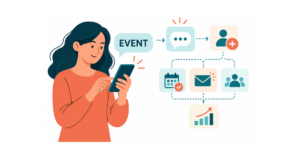

SMS is one of the most effective channels marketers have, and one of the easiest to misuse.
Yes, open rates are high, and response times are fast. But without CRM context, SMS can shift quickly from helpful to intrusive. When every text is treated as urgent, nothing feels important.
In a CRM-driven customer journey, SMS has a specific job. The value isn’t the channel itself; it’s when and why the message is sent.
SMS Is an Accelerant, Not the Foundation
Email does the heavy lifting in most customer journeys. It provides space for explanation, education, and storytelling. SMS works differently.
SMS is best used to reinforce moments that already matter:
- A decision point
- A reminder
- A time-sensitive nudge
When it’s treated as an accelerant, it strengthens the journey without overwhelming it.
Let CRM Context Decide When SMS Belongs
The biggest mistake teams make with SMS is sending messages without enough context.
Before a text ever goes out, CRM data should answer a few basic questions:
- Who is this person?
- Where are they in the journey?
- What action, if any, should happen next?
Lifecycle status, journey stage, engagement history, and customer vs. prospect status all help determine whether SMS is appropriate. Without that context, even a well-written message can feel out of place.
A Simple Way to Think About Email vs. SMS
Rather than debating channels, it helps to think about function.
Email works best when a message needs context like details, links, explanations, or supporting content. SMS works best when the message needs immediacy, such as a reminder, a confirmation, or a prompt to take action.
Where SMS Adds the Most Value in the Journey
SMS tends to perform best at transition points, or moments where a small nudge can keep momentum going.
Common examples include:
- Reminding someone about an upcoming webinar or meeting
- Following up after high-intent behavior when email hasn’t been acted on
- Supporting onboarding steps for new customers
- Alerting customers to time-sensitive updates
In these situations, SMS doesn’t introduce something new. It reinforces what is already in motion.
A Quick Scenario
Imagine a prospect who’s actively engaging with emails but hasn’t taken the next step. They’ve clicked, visited key pages, and shown intent but stalled.
Email continues to educate, but a single, well-timed text triggered by CRM activity can prompt action without restarting the conversation. The message feels relevant because it responds to behavior, not guesses.
That’s where SMS earns its place.
Where SMS Usually Falls Short
Strong performance metrics don’t make SMS the right choice for everything.
SMS is rarely a good fit for:
- Early-stage awareness messaging
- Long-form education
- Complex explanations or feature breakdowns
These moments benefit from channels that allow for nuance and depth. SMS works best when it supports those channels, not when it tries to replace them.
Orchestrating Email and SMS Together
The strongest journeys don’t treat channels in isolation.
In a CRM-driven setup, email and SMS work together:
- Email provides the narrative.
- SMS reinforces timing and urgency.
For example, an email may introduce an offer or resource. SMS follows only if a specific action hasn’t occurred, and only when the CRM data indicates it’s appropriate. Suppression rules ensure contacts don’t receive unnecessary messages once they’ve moved forward.
This kind of orchestration keeps communication relevant without adding noise.
Measure SMS by Its Impact on the Journey
Clicks and replies are useful, but they’re not the whole story.
When SMS is tied to CRM data, success can be measured by:
- Movement through the funnel
- Reduced time to action
- Improved conversion or retention
The goal isn’t more texts. It’s better timing.
What to Focus On Before Adding SMS
Before expanding SMS usage, make sure you have:
- Clear opt-in and consent management
- Defined points in the journey where SMS is allowed
- Suppression rules to prevent overuse
- Reporting that ties SMS activity back to CRM outcomes
When those pieces are in place, SMS becomes a strategic asset instead of a distraction.
Using SMS Without Overusing It
SMS isn’t a standalone strategy. It’s a supporting channel.
When CRM data determines who receives a text and when, SMS reinforces the moments that matter most in the customer journey. Used intentionally and sparingly, it strengthens engagement without eroding trust.
That’s where SMS fits and where it works best.
Want to see how SMS, email, and CRM data work together in a real customer journey?
Schedule a demo to see how the emfluence Marketing Platform orchestrates messaging across channels without overuse or guesswork.