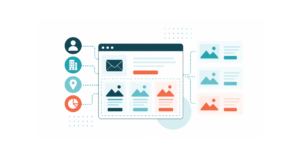

When marketers talk about successful email programs, the conversation often centers around what recipients see.
Compelling subject lines.
Well-designed templates.
Relevant content.
Strong calls to action.
These elements certainly play a role in performance, but they represent only a small portion of what makes an email program successful.
Behind every effective email strategy is a collection of systems, processes, and data that most recipients never see.
In many cases, those behind-the-scenes elements have a greater impact on results than the email itself.
Strong Email Programs Start with Connected Information
Every email campaign depends on information.
- Customer preferences
- Engagement history
- Lifecycle stage
- Past purchases
- Event attendance
- Content consumption
The challenge is that this information often exists in multiple places.
Customer relationship management (CRM) systems, websites, forms, event platforms, customer service applications, and marketing tools all collect valuable data. When those systems operate independently, marketers are left piecing together information from multiple sources.
This can make segmentation, personalization, and reporting significantly more difficult.
Organizations that have access to more complete customer information are often better positioned to deliver relevant communications and meaningful customer experiences.
Automation Supports Consistency
As marketing programs grow, so does complexity.
Additional audiences, communication channels, campaigns, and reporting requirements create more opportunities for manual work.
Without clear processes, teams often spend valuable time performing repetitive tasks that could be automated.
This doesn’t mean every activity should be automated.
Rather, automation should help organizations create consistency, improve efficiency, and ensure important communications happen at the right time.
The goal isn’t simply doing more. It’s creating more capacity for strategic work.
Reporting Is More Than Campaign Metrics
Most marketers track email performance metrics such as opens, clicks, and conversions.
Those metrics provide valuable insights, but they only tell part of the story.
Understanding how email contributes to broader marketing goals often requires visibility into multiple activities and touchpoints.
- Which audiences are engaging?
- Which campaigns are influencing customer actions?
- Which communications drive meaningful outcomes?
Answering these questions requires more than campaign-level reporting.
It requires access to information that helps connect marketing activities with larger business objectives.
Process Matters More Than Most People Think
Many marketing challenges are not caused by technology limitations.
They are caused by inconsistent processes.
- Data is entered differently across teams.
- Audience definitions vary from one campaign to the next.
- Reporting methods change depending on who is creating the report.
Over time, these inconsistencies create friction that affects efficiency, visibility, and decision-making.
Organizations that establish clear processes often find it easier to scale marketing efforts, improve reporting accuracy, and create more consistent customer experiences.
Looking Beyond Individual Campaigns
High-performing email programs rarely succeed because of a single campaign, template, or tactic.
They succeed because the systems supporting those efforts help marketers make better decisions, create more relevant experiences, and operate more efficiently.
While subscribers only see the final message, marketers know there is much more happening behind the scenes.
Understanding those systems is often the first step toward building a stronger email program.
Continue Exploring Marketing Strategy
Email is only one component of a larger marketing ecosystem. Explore additional strategy guides covering customer engagement, marketing automation, CRM integration, customer journeys, reporting, and more.