
Getting someone to opt in to SMS is a win. But the opt-in itself isn’t the strategy.
Someone has just given you permission to communicate through one of their most immediate, personal and protected channels. What happens next can determine whether SMS becomes a useful part of the customer relationship or another stream of promotional messages they quickly tune out.
The first few interactions matter. You need to confirm the subscription, deliver whatever value you promised, establish expectations, and decide how SMS should fit into the broader customer journey.
And that journey shouldn’t look exactly the same for every subscriber.
The Opt-In Is the Beginning of the SMS Journey
It’s easy to think about SMS acquisition as a finish line: someone fills out a form or texts a keyword, their phone number enters the database, and your SMS list grows by one.
From the subscriber’s perspective, however, that’s when the experience starts.
Your first job is to make the transition from the subscriber signing up to the subscriber understanding what they signed up for as seamless as possible.
1. Confirm the Subscription
Start by acknowledging that the opt-in worked.
Your initial message should clearly identify your organization and reinforce what the subscriber agreed to receive. Depending on your program and applicable requirements, it may also need to include information about message frequency, message and data rates, help, opt-out instructions, or other disclosures.
This serves a practical purpose beyond compliance.
People forget what they signed up for. If the first text arrives several days after the initial interaction with no context, you’re asking the subscriber to figure out why your organization suddenly has permission to text them.
A prompt confirmation removes that ambiguity.
2. Deliver What You Promised
If the opt-in came with an offer, resource, alert, or other benefit, deliver it.
Someone who texted a keyword to receive a resource should get the resource. Someone who subscribed for event updates should receive confirmation that they’re enrolled. Someone who signed up for a promotion shouldn’t have to wait through three marketing messages before receiving it.
The first interaction should reinforce the value exchange that convinced the person to subscribe in the first place.
3. Set Expectations Early
Subscribers should also understand what happens after the welcome message.
What kinds of messages will you send? How frequently? Are they signing up for promotions, reminders, alerts, educational content, or some combination?
When setting expectations for message frequency, avoid rigid commitments like “You’ll receive no more than 4 messages per month.” Instead, use more flexible language, such as “You can expect about 4 to 6 messages per month.” This gives you room to accommodate unexpected communication opportunities without exceeding the expectations you’ve set.
Clear expectations can help prevent a common SMS problem: the subscriber technically gave permission, but the messages they receive don’t resemble what they thought they were signing up for.
That’s not a great foundation for a long-term relationship.
Don’t Lose the Context Behind the Opt-In
Knowing that someone opted in is useful.
Knowing why they opted in is much more useful.
A person who texts a keyword after seeing an event promotion is giving you a different signal from someone who checks a box while requesting a product demo. Both may have given you permission to text them, but their needs and expectations aren’t necessarily the same.
Your marketing automation platform or CRM should preserve that context.
Record More Than the Phone Number
Depending on your SMS program and consent requirements, you’ll need appropriate records of how and when permission was obtained.
From a marketing perspective, there are other details worth preserving, too.
That might include the opt-in source, campaign, keyword, form, event, product interest, offer, or other context surrounding the subscription.
Instead of simply knowing:
SMS permission: Yes
You may be able to know:
SMS permission: Yes
Source: Webinar
Keyword: DEMO
Interest: Marketing Automation
Now the opt-in can actually inform what happens next.
Different Opt-Ins Should Trigger Different Journeys
Once you preserve that context, you can use it.
Someone who signs up for event reminders might enter a short sequence leading up to the event.
Someone who requests a resource might receive it immediately by text while email handles the longer follow-up.
Someone who opts in during a demo request might receive appointment confirmations or reminders rather than entering a promotional SMS campaign.
A customer who joins through an in-store keyword could receive an entirely different experience.
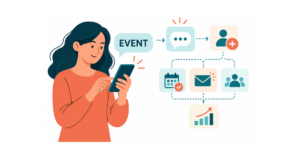
This is where SMS becomes part of marketing automation rather than simply a broadcast channel.
Decide What Role SMS Should Play Going Forward
An SMS opt-in doesn’t mean every future marketing communication should become a text message.
It gives you another channel to work with.
The next decision is figuring out where that channel actually adds value.
SMS Doesn’t Have to Replace Email
Email and SMS don’t need to compete for ownership of the customer journey.
They’re good at different things.
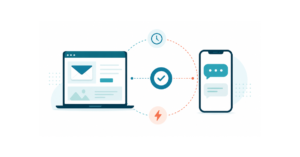
SMS is particularly useful for communications that are timely, concise, and valuable in the moment. Email gives you more room for longer explanations, visual content, detailed resources, and information someone may want to reference later.
A webinar campaign, for example, could use both:
Email: Agenda, speaker details, session information and related resources.
SMS: We’re starting in one hour. Here’s your link.
Or an appointment journey might use:
Email: Complete appointment details and preparation information.
SMS: Reminder: Your appointment is tomorrow at 10 a.m.
The question isn’t whether SMS or email is the better channel overall. It’s which channel makes the most sense for a particular message at a particular moment.
Permission Doesn’t Automatically Equal Relevance
This distinction becomes even more important once someone opts in.
You may have permission to send a text without having a particularly good reason to send every text.
If every subscriber receives every promotion simply because they’re technically eligible, SMS can become noisy very quickly.
Before adding someone to an ongoing SMS campaign, consider what you already know about them.
CRM data, customer status, declared interests, previous purchases, event registrations, location, lifecycle stage, and engagement behavior can all help determine whether a message is relevant.
Instead of asking only:
Can we text this person?
Ask:
Does this person need this message, through this channel, right now?
That is a much higher standard, and usually a better customer experience.
Build an SMS Welcome Journey That Can Adapt
The post-opt-in experience doesn’t need to become a massive automation workflow.
For many SMS programs, the basic structure can be relatively simple:
- Confirm the subscription.
- Deliver the promised value.
- Establish expectations.
- Preserve the source and context of the opt-in.
- Place the subscriber into the appropriate segment or audience.
- Trigger the next step that matches their reason for subscribing.
From there, the journey can adapt.
Let Behavior Influence What Happens Next
A subscriber doesn’t necessarily need to stay on the path you originally expected.
Maybe someone joins through an educational campaign but quickly begins visiting high-intent pages on your website.
Maybe an existing customer expresses interest in another service.
Maybe someone stops engaging entirely.
Maybe sales opens an opportunity in your CRM.
Those are all signals that can change what the subscriber needs next.
Marketing automation allows SMS to respond to those changes instead of operating on a fixed schedule disconnected from everything else you know about the contact.
Know When Not to Send a Text
Automation is just as useful for preventing messages as it is for sending them.
A subscriber might need to be excluded from a campaign because they’ve already converted, entered a sales process, received a similar communication through another channel, changed lifecycle stages, or simply aren’t part of the relevant audience anymore.
Good SMS automation isn’t about finding more reasons to text people.
It’s about making better decisions about when texting is useful.
Give Subscribers Control Over the Relationship
SMS permission isn’t permanent just because someone opted in once.
Subscribers need a clear way to opt out, and valid opt-out requests need to be honored according to the requirements that apply to your program.
But preference management can go beyond a simple subscribed/unsubscribed switch.
Depending on your SMS strategy, subscribers may have different interests or communication preferences that can help you send fewer, more relevant messages.
The important part is making sure those preferences follow the contact.
If SMS data is shared between your marketing automation platform, CRM, sales tools, or other systems, an opt-out or preference change needs to be reflected wherever necessary so another system doesn’t simply put the person back into an SMS audience.
Compliance and customer experience meet at the same place here: when someone tells you how they want to be communicated with, your systems should listen.
What Happens After the Opt-In Matters More Than the List Size
Growing an SMS list is useful, but subscriber count doesn’t tell you whether you have a strong SMS program.
The better question is what happens to those subscribers after they join.
Are you delivering what you promised? Do you understand why they opted in? Are you using that information to create a relevant next step? Does SMS complement the rest of the customer journey? Can your automation adapt when the subscriber’s behavior changes?
An SMS opt-in shouldn’t simply add another phone number to a list.
It should give you another piece of information about what a customer or prospect wants and another channel you can use when it genuinely improves their experience.
Turn SMS Opt-Ins into Connected Customer Journeys
The emfluence Marketing Platform brings SMS, email, marketing automation, segmentation, and CRM data together so marketers can build journeys around more than a phone number.
Use opt-in source, contact data, behaviors, dynamic groups, and automated workflows to determine what happens next and where SMS makes sense alongside your other marketing channels.
Ready to see how SMS can become part of a more connected customer journey? Request a demo of the emfluence Marketing Platform.