
Many organizations invest heavily in their CRM and assume their marketing needs are covered.
At first, that may be true. But then marketing teams begin asking questions.
Why does campaign execution require so many manual steps? Why is audience segmentation difficult to maintain? Why are communications spread across multiple tools? Why is it challenging to get a complete view of marketing performance?
These aren’t necessarily system failures.
They’re often signs that marketing teams have reached a point where CRM functionality alone isn’t enough to support modern marketing demands.
As customer expectations continue to evolve, organizations are discovering that successful marketing requires more than managing customer records. It requires purpose-built tools designed for campaign execution, audience engagement, personalization, and measurement.
What Dynamics 365 Does Well and Where Marketing Teams Hit a Wall
Many organizations using Dynamics 365 eventually find themselves evaluating additional marketing capabilities.
As marketing programs become more sophisticated, requirements often expand beyond managing customer records and sales activities. Teams need tools that support campaign execution, audience segmentation, personalization, automation, reporting, and cross-channel engagement.
That’s why many organizations implement a marketing automation solution alongside Dynamics 365. Some adopt Dynamics 365 Customer Insights – Journeys, while others evaluate dedicated marketing automation platforms that integrate with Dynamics.
The decision is rarely about whether marketing automation is needed. It’s about finding a solution that aligns with how marketing teams want to execute campaigns, manage audiences, automate journeys, and measure performance.
Built for CRM, Not Built for Marketers
CRM platforms are designed to help organizations manage customer relationships and business processes.
Marketing teams, however, have a different set of requirements.
They need to:
- Build and launch campaigns efficiently
- Create personalized customer experiences
- Manage audience segments
- Automate communications
- Analyze engagement across channels
- Coordinate messaging across teams
As marketing programs mature, these needs often extend beyond traditional CRM functionality and add-ons.
Where Dynamics Users Typically Start Looking for More
Many organizations begin searching for additional marketing capabilities when they encounter challenges such as:
- Increasing campaign complexity
- Growing audience expectations
- Expanding communication channels
- Limited visibility into marketing performance
- Difficulty scaling personalized experiences
These challenges don’t indicate a problem with the CRM.
They simply highlight the need for marketing-specific tools designed to support marketing execution.
The Gaps That Show Up in Day-to-Day Marketing
Marketing teams often experience these challenges long before leadership recognizes them as technology gaps.
Campaign Execution and Email Marketing Depth
Modern marketing requires more than sending emails.
Teams need the ability to create, test, approve, manage, and optimize campaigns efficiently.
As programs grow, marketers often look for capabilities such as:
- Reusable content assets
- Responsive email templates
- Landing pages and forms
- Automated workflows
- Approval processes
- Cross-channel campaign management
- Without purpose-built marketing tools, campaign execution can become increasingly time-consuming.
Audience Segmentation and Journey Flexibility
Audience expectations continue to rise.
Customers expect communications that reflect their interests, behaviors, and preferences.
That requires flexible audience segmentation and adaptable customer journeys.
Marketing teams often need to:
- Build dynamic audience segments
- Personalize content based on engagement
- Incorporate preference data
- Respond to behavioral signals
- Adapt journeys as customer needs change
As discussed in our article on personalization without exclusion, overly rigid segmentation can create audience gaps that leave valuable contacts outside of important communications.
Reporting and Marketing-Specific Analytics
CRM reporting and marketing reporting often serve different purposes.
Sales teams may focus on opportunities, pipeline activity, and revenue outcomes.
Marketing teams need visibility into:
- Email engagement
- Campaign performance
- Content effectiveness
- Conversion activity
- Audience growth
- Journey performance
The ability to measure and optimize marketing efforts becomes increasingly important as programs scale.
Inclusive Journey Design and Audience Adaptability
Today’s audiences expect experiences that feel relevant and responsive.
That means designing journeys that account for:
- Different communication preferences
- Varying levels of engagement
- Incomplete customer data
- Multiple communication channels
- Evolving customer interests
The most effective marketing programs don’t simply automate communications. They adapt as customer needs and preferences change.
Why These Gaps Matter More in 2026
Marketing expectations continue to evolve.
The capabilities that once felt advanced are increasingly becoming baseline requirements.
Rising Expectations for Personalization and Accessibility
Customers expect organizations to deliver communications that are:
- Relevant
- Timely
- Accessible
- Consistent across channels
At the same time, marketers are under pressure to create more personalized experiences while managing growing databases and increasingly complex customer journeys.
Meeting those expectations requires more than customer data alone.
It requires tools that help marketers activate that data effectively.
The Cost of Contacts Who Fall Outside Your Automation Logic
One of the most overlooked challenges in marketing automation is what happens to contacts who don’t fit neatly into predefined journeys.
Incomplete data, changing interests, and inconsistent engagement patterns can all create audience gaps.
Without flexible segmentation, preference-driven personalization, and adaptable automation logic, organizations risk missing opportunities to engage valuable contacts.
As customer journeys become more complex, these gaps become more difficult to identify and more costly to ignore.
What a Dedicated MAP Adds to Your Dynamics Stack
For many organizations, the answer isn’t replacing their CRM.
It’s extending it.
Purpose-Built Marketing Execution Alongside Your CRM
A marketing automation platform (MAP) provides capabilities specifically designed for marketers.
This includes:
- Email marketing
- SMS marketing
- Landing pages
- Forms
- Audience segmentation
- Automated customer journeys
- Marketing reporting
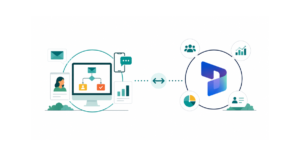
While the CRM remains the system of record, the MAP becomes the system of marketing execution.
The emfluence + Dynamics Model: What Each Does Best
When integrated together, Dynamics 365 and emfluence serve complementary roles.
Dynamics 365 helps organizations manage customer relationships, sales processes, and operational data.
The emfluence Marketing Platform helps marketing teams execute campaigns, automate communications, build dynamic audiences, and measure performance across channels.
Together, they provide a more complete foundation for customer engagement.
Marketing Teams Need More Than CRM Functionality
Organizations don’t outgrow their CRM because it’s failing.
They outgrow the assumption that CRM functionality alone can support every marketing need.
As marketing programs become more sophisticated, teams need tools designed specifically for campaign execution, personalization, automation, and measurement.
The most successful organizations often combine strong CRM data with a dedicated marketing automation platform that helps marketers turn customer insights into meaningful engagement.
Extend the Value of Your Dynamics Investment
The emfluence Marketing Platform integrates with Dynamics 365 to help organizations execute campaigns, automate customer journeys, build dynamic audiences, and measure marketing performance.
Schedule a demo to see how emfluence can complement your Dynamics environment.